QR code for food courts: centralise ordering without deploying a complex POS
A food court has different needs from a classic restaurant. It can bring together several stalls, several kitchens and a large volume of customers over short periods. The challenge is simple: let customers order easily, while avoiding overly heavy organisation on the operator side. QR code ordering can meet this need, reducing friction without necessarily deploying a complex POS at every stall.
Why food courts are hard to organise
In this context, the customer can lose time choosing, queuing, ordering, paying, waiting and collecting their order. The QR code can simplify part of this journey by becoming a single entry point to the food court's offer.
QR code per table, global or per zone?
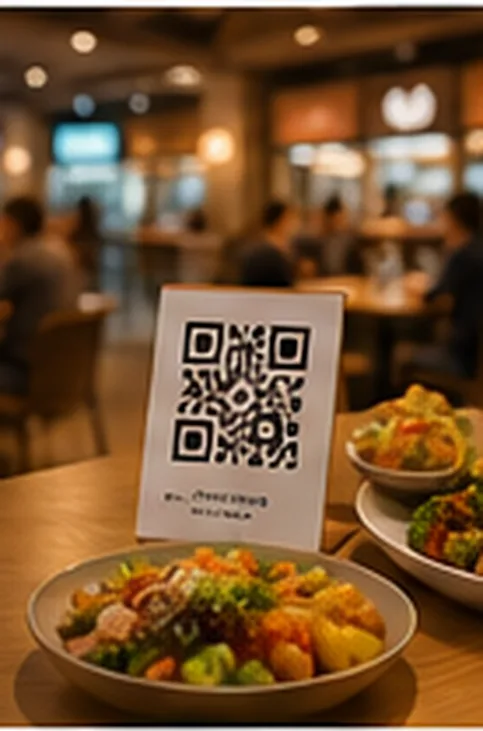
QR code per table
The customer orders from their table. The team knows where to bring the order — suited to food courts with organised seating areas.
Global QR code
The customer orders from anywhere, then picks up at the counter — suited to more open spaces or stall pickup.
QR code per zone
The QR code maps to a zone: terrace, hall, event space or VIP area.
Advantages for operators
- better flow
- fewer queues
- more legible orders
- simplified payment
- ability to test quickly
- less imposed hardware
Limits to anticipate
- who receives which order?
- how to handle multi-stall orders?
- does the customer pay once or several times?
- where do they collect their order?
- how to signal an order is ready?
QR2App for food courts
QR2App can work without a mandatory POS or an imposed printer, with orders received via an interface with notifications — see also our article on the POS-free solution in France and our guide to ordering without a mandatory printer. To budget properly, see the cost of a restaurant QR code solution and to get started fast, how to launch a QR code solution in 24 hours. Also plan a process to manage unpaid or abandoned orders, common in a multi-stall environment.
FAQ
Is QR code ordering suited to food courts?
Yes, it can help reduce queues and centralise order-taking.
Does each stall need a POS?
Not necessarily. A solution without a mandatory POS can make it easier to get started.
Can several stalls be managed with one QR code?
Yes, as long as menus, orders and preparation zones are well organised.
Is online payment useful in a food court?
Yes, it speeds up the journey and reduces counter payments.
Can QR2App suit a temporary food court?
Yes, its approach without a mandatory POS or an imposed printer suits temporary or seasonal formats.