Reducing front-of-house staff costs: 7 concrete levers for your restaurant
Payroll is, along with raw materials, one of the two main cost items in a restaurant. Front-of-house staff represent a heavy charge — all the more so because recruitment is difficult and turnover is high in the sector. Reducing front-of-house staff costs does not mean degrading service or pressuring teams: it is about better distributing effort, automating what can be automated and refocusing your waiters on what adds value. Here are 7 concrete levers, from the most organisational to the most technological.
Why the "front-of-house" line item weighs so much
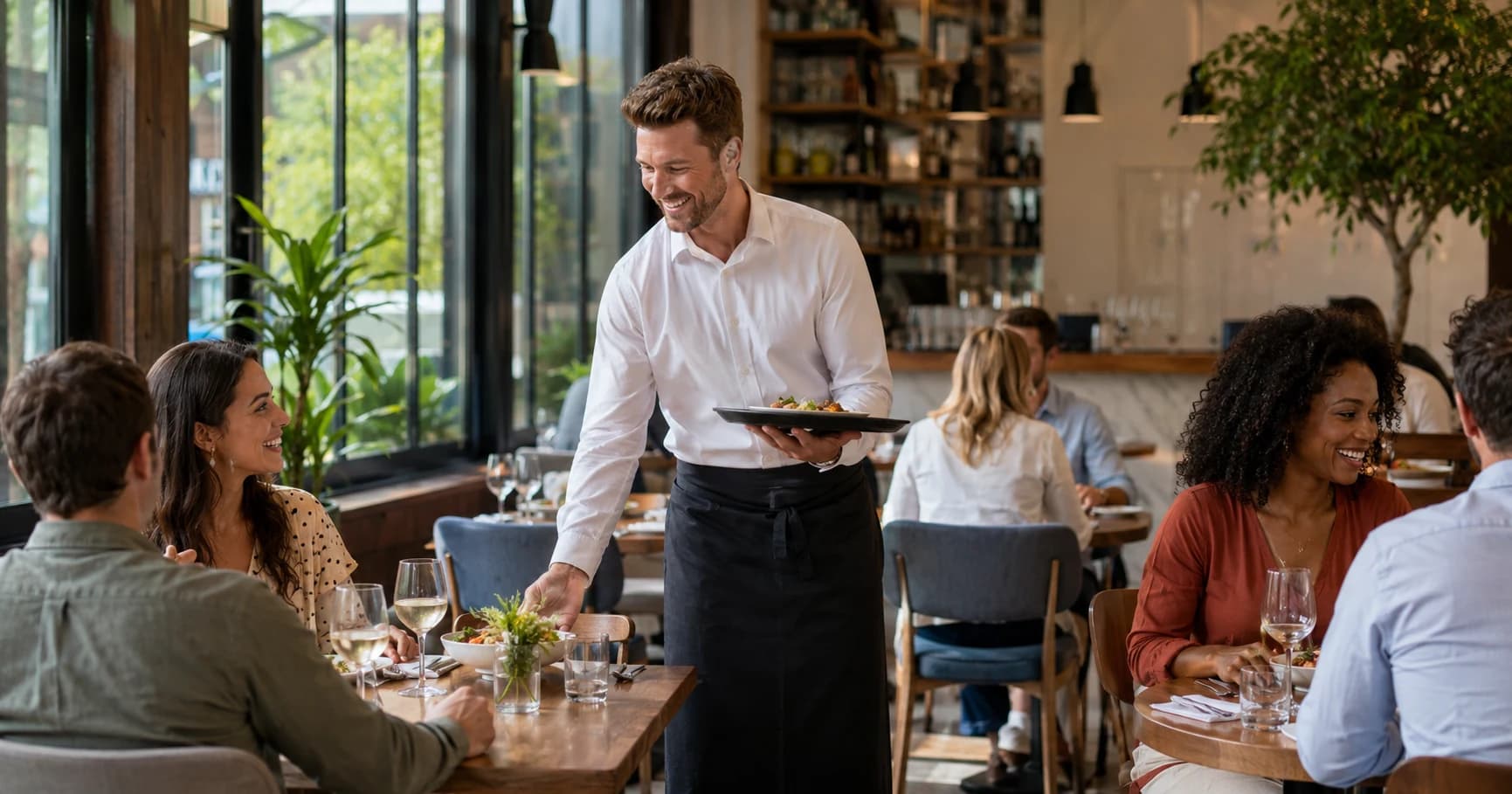
Before acting, you need to understand where time goes. A waiter spends a significant part of their service on repetitive, time-consuming tasks: taking orders table by table, going back and forth to the till, bringing bills, processing payments, giving change. These tasks are necessary, but they do not directly create value as perceived by the customer — unlike welcoming, advising and service quality.
By reducing time spent on repetitive tasks, you can either serve more covers with the same headcount, or maintain quality with a leaner team during quiet periods. See also our article on how to increase table turnover to measure the cumulative impact.
The 7 concrete levers
- 1
Align schedules with actual peak traffic
Analyse your actual footfall curves (by day, by time slot) and adjust schedules as closely as possible. A few fewer hours of presence during quiet periods, with no impact on service, quickly adds up to significant monthly savings.
- 2
Invest in team versatility
A versatile team, capable of switching between roles (floor, counter, payment, running), absorbs rushes better without needing to add dedicated staff. Cross-training has an initial cost, but it reduces dependence on a large headcount.
- 3
Reduce unnecessary movement
Rethink the layout of your dining room and service areas. Well-placed service stations, intermediate clearing points, and accessible kitchen and bar reduce back-and-forth. Every movement avoided is recovered server time.
- 4
Digitalise order-taking
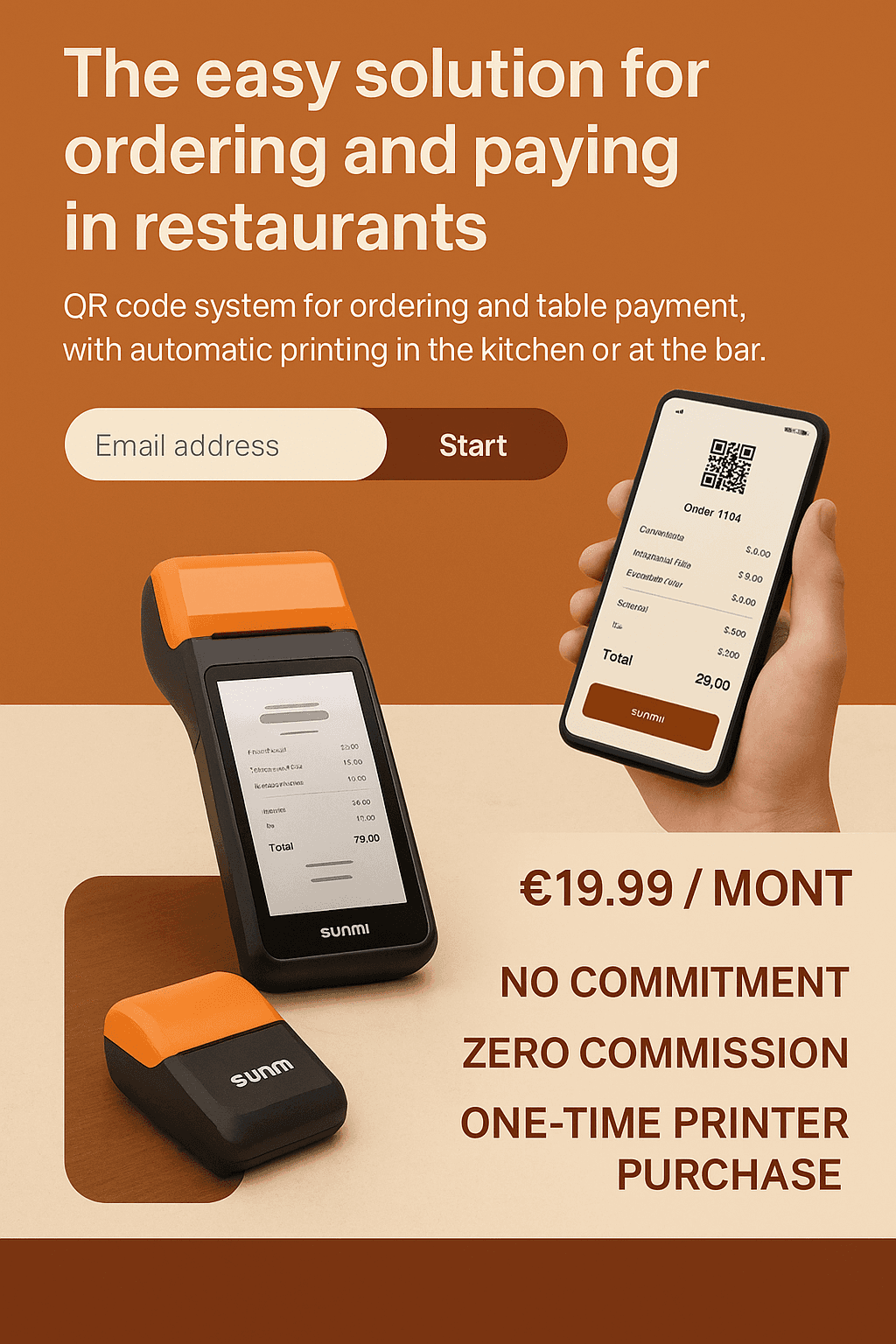
When the customer places their own order via a QR code from their smartphone, you eliminate an entire task from the server's routine. The order goes directly to the kitchen or bar. A single waiter can then manage more tables without being overwhelmed.
- 5
Automate payment processing
With table payment integrated into digital ordering, the customer pays when they choose, directly from their phone. You eliminate a complete step and streamline table release, without mobilising a waiter for each payment.
- 6
Minimise ordering errors
When the order is entered directly by the customer, without an intermediary or transcription in the noise, misunderstandings drop sharply. Fewer errors means less waste and less correction time for the team.
- 7
Measure to manage
Track the payroll-to-turnover ratio, covers per waiter, average basket. A digital ordering dashboard automatically provides some of these metrics. With these indicators, you adjust based on facts, not impressions.
The fastest lever to activate: QR code ordering and payment
Among these 7 levers, digitalising ordering and payment is the most immediate to implement and the most visible in terms of front-of-house costs. By allowing customers to order and pay from their smartphone, you remove two repetitive tasks from your waiters' daily routine. Concretely, a waiter can manage more tables without pressure.

Example — Bec Montmartre (Paris)
After switching to QR code ordering with QR2App, Bec Montmartre restaurant saw approximately a 25% reduction in front-of-house staff workload, while improving table turnover by 20%. The team, freed from repetitive tasks, refocused on welcoming and advising — with 9 out of 10 customers satisfied with ordering autonomy.
To learn more about QR code ordering, see our complete guide on the QR code menu and our article on ordering without a POS.
Mistakes to avoid
- ✗Cutting staff without reorganising: reducing headcount without lightening tasks degrades service and exhausts the team. The order is reversed: automate first, then adjust.
- ✗Neglecting training: a team poorly trained on a new tool rejects it. Accompany the change.
- ✗Choosing a heavy solution: a system requiring hardware and a complex installation cancels out part of the gain. Prefer a solution that is quick to deploy.
QR2App, without adding to your fixed costs
To digitalise ordering and payment without adding overhead, QR2App works on a fixed subscription from €19.90/month, with no commission on your sales and no mandatory cash register system. You reduce your variable staff cost without inflating your fixed costs or hardware fleet. See also how to digitalise your restaurant menu.
FAQ
Does reducing staff mean degrading service?
No, if you first automate repetitive tasks. The waiter refocuses on value (welcoming, advising), which often improves the perception of service.
Does QR code ordering eliminate jobs?
It mainly reduces repetitive workload and allows absorbing peaks without over-staffing. Many establishments see it as a way to better employ a team that is hard to recruit.
How long to see an effect?
The effect on service fluidity is immediate from setup; scheduling optimisation takes a few weeks, supported by data.