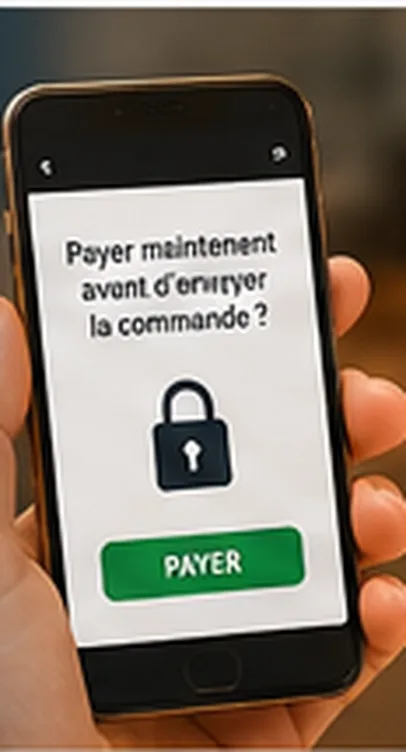
Should payment be required before sending a QR code order?
QR code ordering lets customers view the menu, order and sometimes pay directly from their phone. But one question comes up often among restaurateurs: should the customer be required to pay before the order is sent? The answer depends on the type of venue, the level of service you want and the operational risk you want to reduce. The goal isn't to pick one universal rule, but the journey that matches your service.
The advantages of payment before ordering
Reduce unpaid orders
The most obvious advantage: if the customer pays before the order is sent, the risk of an unpaid order is greatly reduced — useful in bars, rooftops, beach bars and temporary events.
Speed up service
The team doesn't need to come back to collect payment, which reduces back-and-forth and lets them focus on preparation, especially during rush periods.
Smooth out the customer experience
The customer orders, pays and receives their order without waiting for the bill — this also makes re-orders easier.
Reduce the team's mental load
Part of the workload tied to taking payment disappears, which especially helps venues with a small team.
Improve table turnover
The time spent waiting for the bill is reduced, which can improve turnover without rushing customers.
The limits of mandatory payment
Less suited to traditional restaurants
In a sit-down restaurant, some customers like to order throughout the meal then pay at the end. Requiring payment before every order can feel too transactional.
Less flexibility for add-ons
If the customer orders several times during the meal, they may need to pay several times — fine in a bar, less pleasant in a fine-dining restaurant.
Handling changes
If a product is unavailable or the order needs to change, a payment already taken can complicate cancellation or refunds.
Psychological friction
Some customers may be less inclined to order if payment is required upfront, depending on the type of clientele.
When is payment before ordering recommended?
Bars and cocktail bars
The customer orders and pays directly; the team prepares without handling payment later.
Beach bars
Customers on sun loungers or in remote areas: prepayment avoids missed charges.
Rooftops
Payment before ordering reduces the wait at the bar during rush periods.
Hotels with a pool or rooftop
The customer orders from an outdoor area without signing a bill or waiting for a server.
It's also an effective approach for QR code ordering in a nightclub bar and for QR code ordering on a restaurant terrace, where peak periods make prepayment especially useful.
The best compromise: optional payment depending on context
The best approach isn't always "mandatory payment" or "payment at the end". In many venues, it's worth choosing per area or moment: mandatory payment on the terrace or rooftop, payment at the end in the dining room, mandatory payment during events.
If a product is unavailable or an order needs to be cancelled after payment, a clear refund process is essential. See our guide to managing unpaid or abandoned orders.
FAQ
Is payment before ordering mandatory with a QR code solution?
No, it depends on the solution and the configuration chosen.
Which venues benefit most from payment before ordering?
It is especially useful in bars, rooftops, beach bars, terraces, hotels and events.
Is it suited to a traditional restaurant?
Not always. In a sit-down restaurant, paying at the end can remain more natural.
Does payment before ordering reduce unpaid orders?
Yes, because the order is settled before being sent to the team.
Can different rules be used per area?
Yes, that is often the best approach: mandatory payment in some areas, classic payment elsewhere.